

Grammar, Spelling & Word Usage: A Complete Guide to Better English
Good English is not only about knowing a lot of words. It is also about knowing how words work, how they are spelled, and when they fit naturally into a sentence.
That is where grammar, spelling, and word usage come together. A sentence can contain familiar words but still sound confusing if the grammar is off, a word is misspelled, or the wrong term is used for the situation.
This guide is designed to make those problems easier to understand. Instead of treating English as a collection of complicated rules, we focus on practical explanations, clear examples, common mistakes, and useful distinctions that help you choose the right words with confidence.
Whether you are checking a spelling, learning the difference between two similar words, improving your sentence structure, or expanding your vocabulary, this guide gives you a straightforward place to start.
What Do Grammar, Spelling & Word Usage Mean?
These three areas are closely connected, but they answer different questions.
Grammar is about how words are arranged and changed to form meaningful sentences. It covers things such as verb forms, sentence structure, agreement, tense, and the role a word plays in a sentence.
Spelling is about writing words using their standard written forms. A person may know exactly what a word means but still spell it incorrectly.
Word usage is about choosing and using a word appropriately. Two words can look similar while having different meanings, grammatical roles, or levels of formality.
Consider these simple examples:
- Grammar: “She say she is ready” needs a grammatical correction to “She says she is ready.”
- Spelling: “Sais” is not the standard spelling of the English verb form says.
- Word usage: “Offended” and “offensive” are related, but they describe different things.
Understanding the difference between these areas helps you solve language problems more accurately instead of treating every problem as “just grammar.”
Why Correct Grammar Matters
Grammar gives a sentence its structure. Without it, readers may understand your general idea but still have to work harder to figure out exactly what you mean.
For example:
She goes to work every morning.
The verb agrees with the singular subject “she.”
Now compare:
She go to work every morning.
The meaning is still understandable, but the sentence does not follow standard subject-verb agreement.
Grammar becomes especially useful when sentences contain more information. Punctuation, verb tense, pronouns, modifiers, and sentence order can all affect meaning.
Good grammar does not mean every sentence has to sound formal. In fact, effective writing often uses simple structures because they make ideas easier to follow.
The goal is not to make your English complicated. The goal is to make it clear, accurate, and appropriate for the situation.
Common Spelling Problems and Why They Happen
Spelling mistakes happen for many reasons, and not all of them mean the writer does not understand the word.
Sometimes pronunciation creates confusion. A word may sound different from what its written form suggests, which can lead someone to spell it phonetically.
Sometimes two words look almost identical, so the wrong spelling feels familiar.
Typing speed is another factor. On phones and keyboards, a single wrong letter can turn a correct word into something that looks unfamiliar.
There are also words whose forms must be learned rather than guessed from pronunciation. That is why reading a word in context is often more helpful than trying to spell it from sound alone.
For example, the difference between says and “sais” can be confusing because the pronunciation of “says” does not make its spelling immediately obvious. Our detailed guide, Says or Sais: Which Spelling Is Correct?, explains the spelling, pronunciation, verb forms, and practical sentence examples.
Another common spelling confusion is bareable or bearable. Our guide to Bareable or Bearable: Which Spelling Is Correct? explains the standard spelling, its meaning, and how to use it correctly in everyday sentences.
A useful habit is to learn a word together with its common forms rather than memorizing one isolated spelling.
How to Tell Similar Words Apart
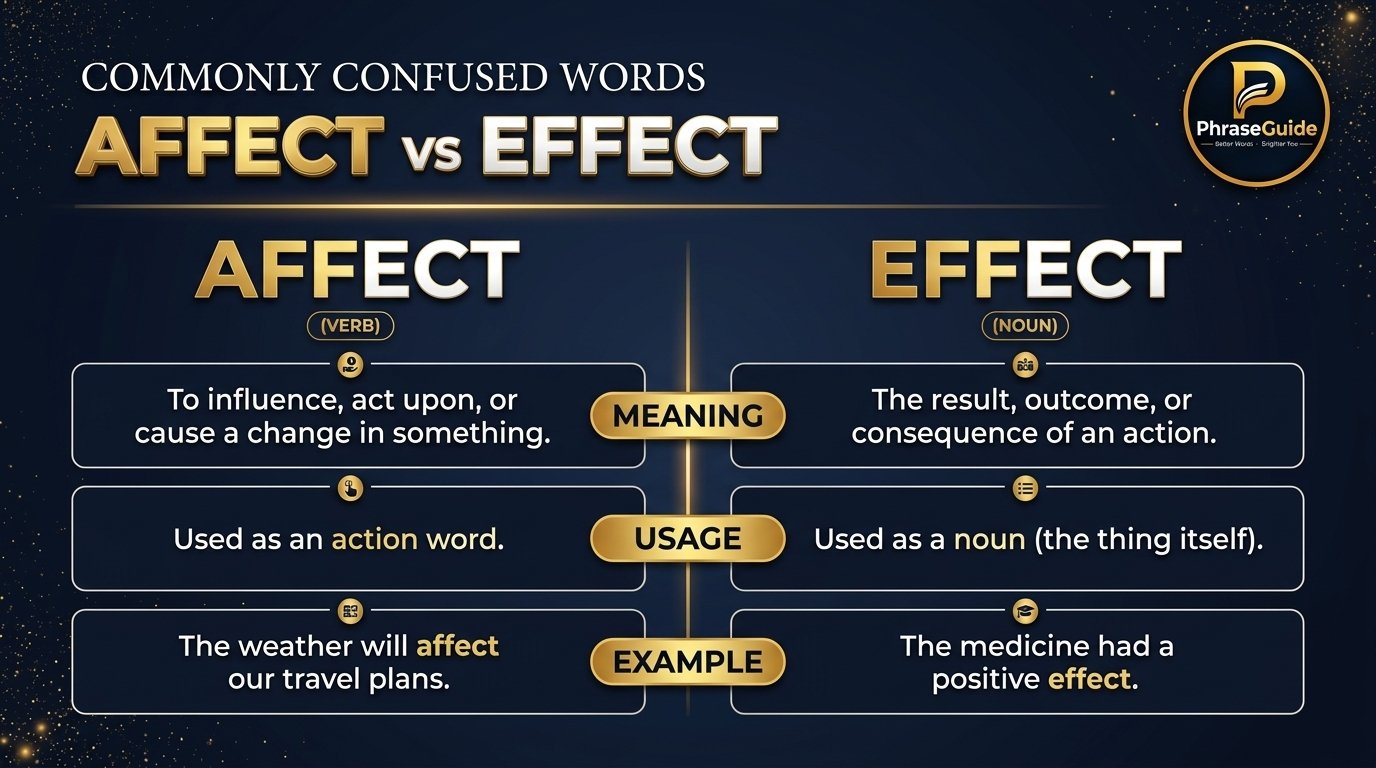
Some of the hardest English questions are not really spelling questions at all. They are word-choice questions.
Two terms may look or sound similar but have different meanings.
For example:
Excel and accel may appear similar when spoken or typed, but they do not work the same way in standard English. Our guide to Excel or Accel: Which Word Is Correct? explains which form belongs in ordinary English and how to use it correctly.
When you encounter two confusing words, ask three things:
- What does each word mean?
- What grammatical role does each word have?
- Does the word fit the meaning of my sentence?
That approach is much more reliable than choosing whichever spelling “looks right.”
Context is especially important because the correct word depends on what you are trying to communicate. A word that is suitable in casual conversation may not be the best choice in formal writing.
How Pronunciation Can Affect Spelling
English spelling and pronunciation do not always line up in an obvious way.
That is why people sometimes know what a word means but still write it incorrectly. They hear a sound and try to reproduce that sound with letters, even though standard spelling follows a different pattern.
This is particularly common with words that have:
- unusual vowel sounds
- silent letters
- unexpected letter combinations
- forms that change pronunciation
- similar-sounding alternatives
The solution is not to ignore pronunciation. Pronunciation can help you recognize a word, but it should not be your only spelling guide.
A stronger approach is to connect three things:
sound + written form + meaning
For example, when learning a new verb, notice how it looks in its base form and common forms. That makes it easier to recognize when you encounter it later.
Reading also helps. Seeing the same word repeatedly in correctly written sentences builds familiarity with its standard form.
Choosing the Right Word for the Situation
Correct word usage is about more than dictionary definitions.
A word can be technically related to your idea and still feel wrong in a sentence because it does not match the context, tone, or grammatical structure.
Take the related forms offend, offended, and offensive.
- Offend describes an action.
- Offended describes a person’s reaction.
- Offensive describes something that may cause offense or appear insulting.
That distinction matters:
I did not mean to offend her.
She was offended by the comment.
The comment was offensive.
All three sentences use words from the same family, but they perform different jobs.
This is one reason learning individual words without learning their related forms can create problems. A better vocabulary study method is to understand how a word behaves in actual sentences.
For a practical example of this type of spelling and usage confusion, see Affended or Offended: Which Spelling Is Correct?.
Grammar, Spelling and Usage in Everyday Writing

You do not need the same style of English in every situation.
A text message between friends may be relaxed and conversational. A school assignment needs clearer grammatical structure. A work email usually requires a professional tone. A public article needs to be easy for a broad audience to understand.
The basic principles remain important in all of them, but the level of formality can change.
For example, compare:
Casual:
Hey, can you send that over?
Professional:
Could you please send that document when you have a chance?
Neither sentence is automatically “better.” Each fits a different context.
The important thing is intentional writing. When you understand grammar and word usage, you can choose the style you need instead of relying on accidental wording.
Before sending or publishing something, it can help to ask:
Is the sentence clear?
Is the spelling correct?
Does the word mean what I intend?
Does the tone fit the audience?
Those four checks catch a surprising number of avoidable problems.
Building a Stronger English Vocabulary
A larger vocabulary is useful, but memorizing long lists of words is not always the best way to improve.
Words become more useful when you understand their meaning, pronunciation, grammatical role, related forms, and context.
For example, when learning a noun, it can help to know whether it has a related verb or adjective. When learning a verb, pay attention to its common forms and the kinds of sentences in which it appears.
Specialized vocabulary works the same way. You may not use scientific terms in everyday conversation, but learning them can improve your reading and subject knowledge.
For readers interested in expanding vocabulary by topic and letter, our guide to Scientific Words Starting With J brings together useful scientific terms with their meanings and explanations.
The key is to learn words in context rather than treating vocabulary as a list of disconnected definitions.
How to Check Whether a Word Is Correct
When you are unsure about a word, avoid guessing based only on appearance.
Start by identifying what you want the word to mean. Then check whether the word exists in the form you plan to use and whether its grammatical role matches your sentence.
A practical checking process is:
First: Look at the base word.
Second: Check the meaning.
Third: Check the grammatical form.
Fourth: Read the completed sentence.
Finally: Consider whether the tone suits your audience.
For unfamiliar vocabulary, a reputable dictionary can also help confirm spelling, pronunciation, definitions, and common usage.
This process is especially useful when two forms look almost identical. A quick check is usually better than confidently repeating a word that may be incorrect.
Common English Mistakes Worth Watching
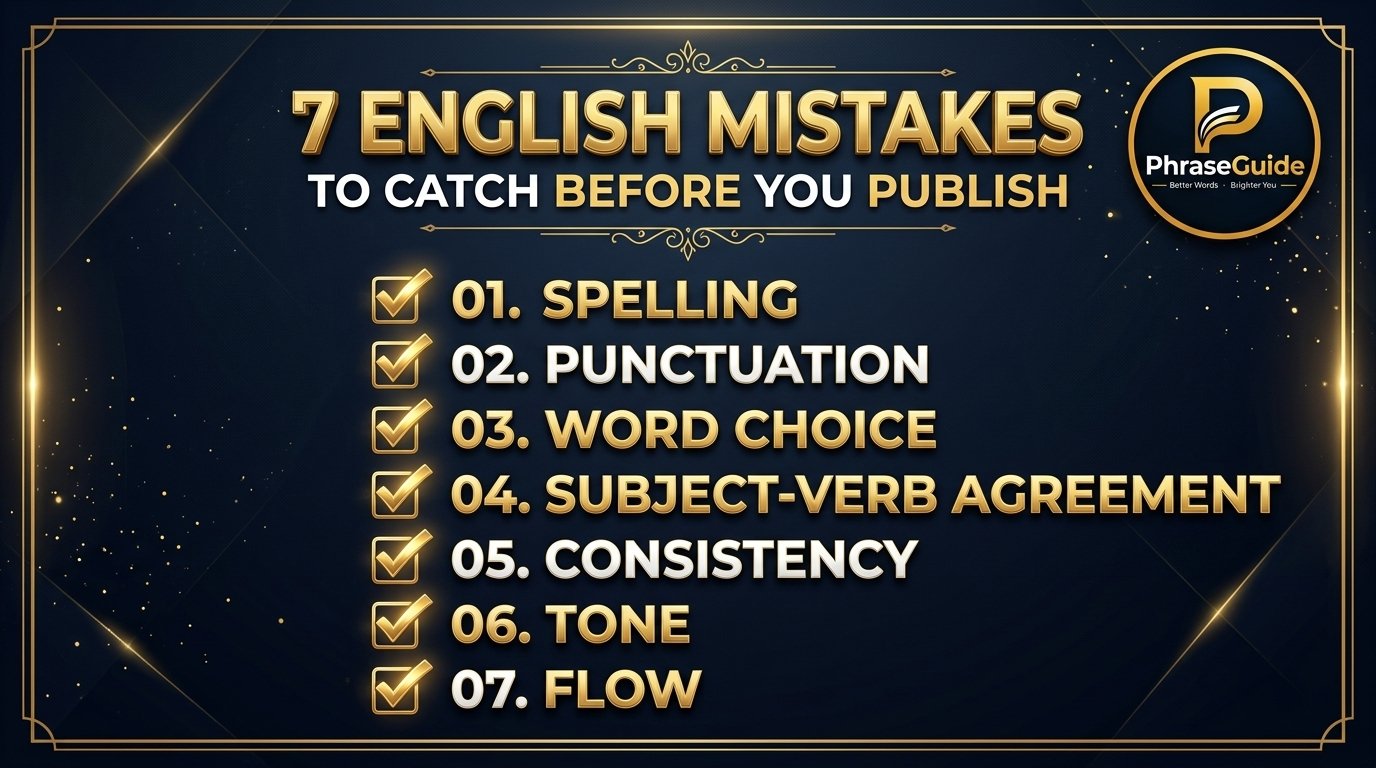
Some mistakes appear again and again because they involve patterns that are easy to misunderstand.
These include:
- spelling a word according to pronunciation
- confusing two words that look alike
- using a word with the wrong grammatical form
- mixing singular and plural agreement
- confusing present and past forms
- choosing a technically related word that does not fit the sentence
- carrying informal texting habits into formal writing
- using a British or American spelling inconsistently
The good news is that most of these mistakes become easier to catch once you know what to look for.
Proofreading is particularly valuable when a sentence “sounds fine” but something about it still looks unfamiliar on the page. Reading the sentence slowly can reveal missing words, incorrect endings, or unusual spellings that are easy to overlook while drafting.
A Simple Method for Improving Your English
You do not need to master every grammar rule at once.
A practical approach is to improve one area at a time:
Read: Pay attention to how words are used in real sentences.
Notice: When you see an unfamiliar word, look at its meaning and form.
Compare: Put confusing words side by side and identify the difference.
Write: Use new words in your own sentences.
Review: Check spelling, grammar, and word choice before publishing or sending your writing.
This method turns English improvement into an ongoing skill rather than a one-time memorization exercise.
The more you notice patterns, the easier it becomes to recognize them automatically.
Grammar, Spelling & Word Usage: Quick Reference
| Area | Main Question | Example |
| Grammar | Is the sentence formed correctly? | “She says” rather than “She say” |
| Spelling | Is the word written correctly? | “Offended” rather than “affended” |
| Meaning | What does the word actually mean? | Understanding what “offend” expresses |
| Word usage | Does the word fit this sentence? | Choosing “offended” instead of “offensive” |
| Pronunciation | How is the word spoken? | Learning the sound of “says” |
| Word forms | How does the word change? | offend → offended → offending |
| Context | Does it fit the situation? | Casual vs. professional wording |
This is the central idea behind the entire topic: correct English comes from understanding how spelling, grammar, meaning, and context work together.
Frequently Asked Questions
What is the difference between grammar and spelling?
Grammar deals with how words function and combine in sentences, while spelling deals with writing individual words in their standard written forms.
Why is word usage important?
Correct word usage helps you express the intended meaning clearly and prevents you from choosing a word that is technically similar but wrong for the context.
Why do English words have confusing spellings?
English has many words whose spelling cannot always be predicted directly from pronunciation, which can lead to mistakes when people spell words by sound.
How can I improve my English spelling?
Read regularly, pay attention to unfamiliar words, learn their standard written forms, and review words that you repeatedly misspell.
How can I improve my grammar?
Start with the sentence patterns you use most often, learn the relevant rules, and practice applying them in your own writing.
What is the best way to learn confusing English words?
Study the words together with their definitions, grammatical roles, related forms, and example sentences. Comparing similar words is often more effective than memorizing isolated definitions.
Conclusion
Grammar, spelling, and word usage all contribute to clear communication. Grammar gives sentences structure, spelling gives words their standard written form, and word usage helps you select language that matches your meaning and context.
You do not need complicated language to write well. Strong English is often built from simple habits: understand the word, check the form, use it in context, and make sure the final sentence says exactly what you intend.
PhraseGuide’s guides on Says or Sais, Excel or Accel, Scientific Words Starting With J, and Affended or Offended provide more focused explanations when you need help with a particular spelling, vocabulary, or word-usage question.
The goal is simple: understand words better so you can use them more confidently.