
Texting Slang & Word Meanings: Complete Guide
Have you ever received a text containing an abbreviation or slang term you didn’t understand? You’re not alone. Texting Slang & Word Meanings change quickly, and expressions that are common in one online community may be unfamiliar to someone else.
From short abbreviations to informal phrases, people use texting slang to communicate faster, react to situations, show emotion, and make conversations feel more casual.
This guide brings together common texting slang, chat abbreviations, and online word meanings in one place. You can learn how these expressions are used, understand the context behind them, and find detailed explanations for individual terms.
Whether you’re trying to understand a message from a friend, a social media comment, a gaming chat, or a new online conversation, the guides below can help you make sense of unfamiliar slang.
What Is Texting Slang?
Texting slang is informal language used in text messages, social media, chats, and other digital conversations.
It can include:
- Acronyms and abbreviations
- Shortened phrases
- Internet slang
- Casual expressions
- Reaction words
- Informal spellings
- Platform-specific expressions
Some terms are extremely common, while others are used by smaller groups or in specific situations.
For example, people may shorten common expressions because typing a few letters is quicker than writing an entire sentence. Other terms are used because they communicate a certain tone or emotion that a formal phrase does not.
The important thing is that not every abbreviation has one universal meaning. Context often determines what the sender actually intended.
Why Do People Use Slang in Text Messages?
Texting slang has become a normal part of online communication because digital conversations are usually quick and informal.
Faster Communication
Short abbreviations can make it easier to respond quickly, especially during active conversations or group chats.
Casual Tone
Slang can make a message sound relaxed and conversational rather than formal.
Emotional Expression
Some expressions communicate surprise, disbelief, excitement, frustration, humor, or curiosity in just a few characters.
Online Culture
Social media, gaming communities, memes, and messaging platforms constantly introduce and spread new expressions.
A term that starts in a small online community can eventually become familiar to a much wider audience.
How to Understand an Unfamiliar Texting Term
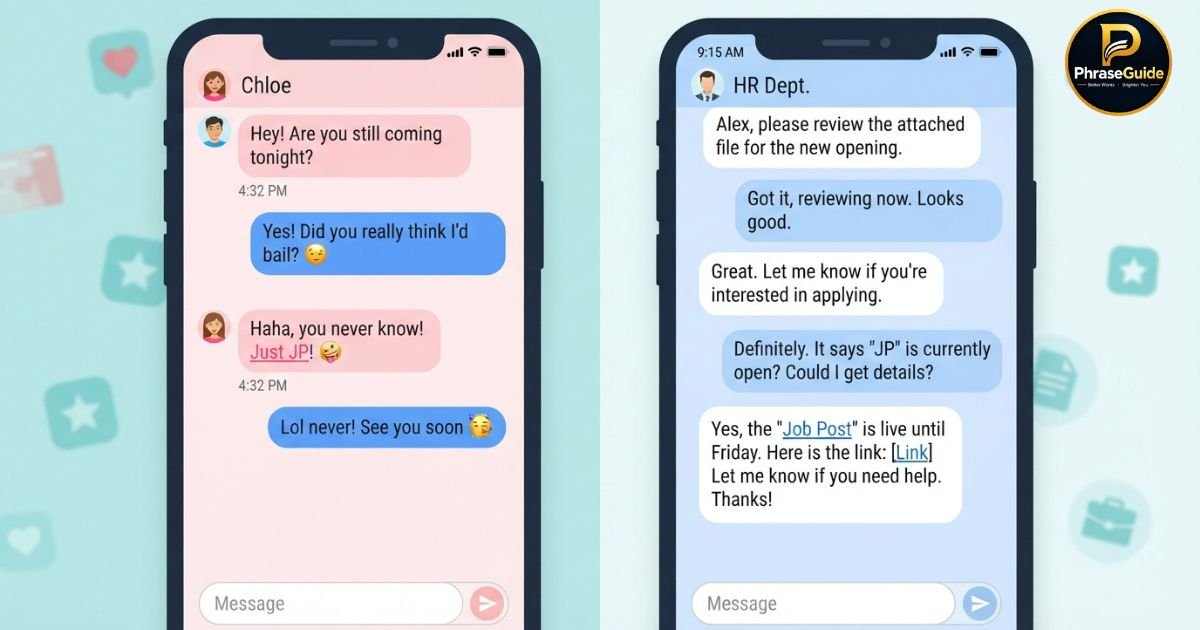
When you receive a word or abbreviation you don’t recognize, the letters alone may not tell you the complete story.
Look at the Surrounding Message
Read the messages before and after the abbreviation. The surrounding conversation often provides the strongest clue.
Consider the Relationship
An expression between close friends may sound completely different when used by a stranger, coworker, or new acquaintance.
Pay Attention to Tone
Capital letters, punctuation, emojis, and surrounding words can change how a message feels.
For example, the same short expression could sound:
- Funny
- Friendly
- Surprised
- Flirty
- Frustrated
- Sarcastic
- Aggressive
Think About the Platform
Some terms appear more frequently on specific platforms or communities, although a term’s meaning is not necessarily limited to one platform.
Check Whether It Has Multiple Meanings
Some abbreviations have more than one possible interpretation. In those cases, context matters even more.
Popular Texting Slang & Word Meanings
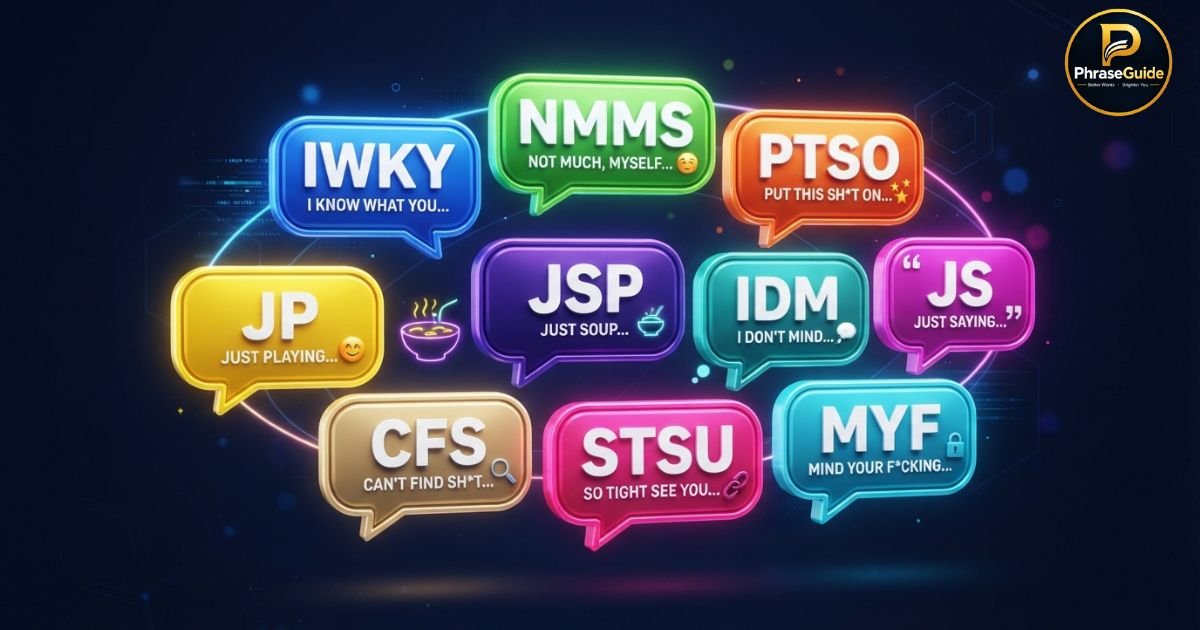
The following guides cover some of the texting abbreviations and slang terms we’ve explained in detail on PhraseGuide.
IWKY Meaning in Text
IWKY is an abbreviation that can appear in casual chats and online conversations. Its meaning and tone can depend on the relationship between the people communicating.
Read our detailed guide: IWKY Meaning in Text: What Does IWKY Mean in Chat?
NMMS Meaning in Text
NMMS is a slang abbreviation associated with “No Mames” and can express reactions such as surprise, disbelief, frustration, or amazement depending on the context.
Learn more about its tone, usage, examples, and when it may be inappropriate: NMMS Meaning in Text: What Does NMMS Mean in Chat?
PTSO Meaning in Text
Wondering what PTSO means when you see it in a message or online conversation? The meaning can depend on how the abbreviation is being used and the context around it.
See the full explanation: PTSO Meaning in Text: What Does PTSO Mean in Texting?
JP Meaning in Text
JP can appear in casual messages and online conversations, but abbreviations can sometimes have more than one interpretation.
Explore its meaning, uses, and examples here: What Does JP Mean Text? Meaning, Uses & Examples
JSP Meaning in Text
If you’ve come across JSP in a conversation and aren’t sure what the sender meant, our detailed guide explains the term in the context of messages and online communication.
Read: JSP Meaning in Text: What Does JSP Mean in Messages?
IDM Meaning in Text
IDM is another abbreviation you may encounter in casual texting. Understanding the surrounding conversation helps determine how the sender intends it.
Get the full explanation: IDM Meaning in Text: What Does IDM Mean in Texting?
JS Meaning in Text
Short expressions like JS are common in digital conversations, but their meaning can depend on the context in which they appear.
Learn what it means and how people use it: JS Meaning in Text: What Does JS Mean in Texting?
CFS Meaning in Text
If someone uses CFS in a text or social media conversation, the intended meaning may depend on the topic being discussed.
See the examples and usage guide: CFS Meaning in Text: What Do CFS Mean in Texting?
STSU Meaning in Text
STSU is the type of abbreviation that can leave readers confused when they encounter it for the first time.
Find out what it means, how it is used, and see examples: What Does STSU Mean in Text? Meaning, Examples & How to Use It
MYF Meaning in Text
MYF is another short expression you may come across in digital communication. Its intended meaning is best understood by looking at the surrounding conversation.
Read the complete guide: What Does MYF Mean in Text? Meaning, Uses & Examples
Texting Slang in Different Types of Conversations
The same type of slang can appear across many digital environments, but the tone and purpose may change.
Text Messages
Private messages between friends often contain the most informal language. People may use abbreviations to reply quickly or make conversations feel more natural.
Group Chats
Group conversations often develop their own shorthand, especially when people communicate frequently.
Social Media
Comments, direct messages, captions, and replies can all contain slang. Some expressions also become popular because they spread through viral posts and online communities.
Gaming Chats
Gaming conversations tend to move quickly, so short abbreviations and reaction terms can be especially useful.
Dating Conversations
Slang can sometimes communicate interest, humor, surprise, or friendliness in early conversations. However, not every informal expression is suitable for every person or situation.
Professional Communication
Texting slang is usually better suited to informal communication. In work emails, business messages, academic writing, and other formal situations, clear and complete wording is generally safer.
Why Context Matters So Much
One of the biggest mistakes people make with slang is assuming that every abbreviation has one fixed definition.
Consider a simple example: a short abbreviation may mean one thing in a casual conversation and something else in a technical, professional, or community-specific setting.
That’s why a good slang explanation should answer more than:
“What do these letters stand for?”
It should also explain:
- How the term is used
- What tone it can have
- Where people commonly encounter it
- Whether it is informal or formal
- Whether it can be misunderstood
- What alternatives may be clearer
This is particularly important with less common abbreviations.
Texting Slang vs. Formal Language
Knowing an abbreviation and knowing when to use it are two different things.
Texting slang generally works best in situations such as:
- Conversations with friends
- Casual group chats
- Social media
- Gaming communities
- Relaxed online conversations
Formal situations usually call for clearer wording:
- Business emails
- Job applications
- Academic assignments
- Professional communication
- Official documents
- Messages to unfamiliar clients or coworkers
For example, an abbreviation may be perfectly understandable to a close friend but confusing to someone who has never encountered it.
When clarity matters, writing the full phrase is often the better choice.
Common Types of Texting Slang
Texting slang isn’t limited to four-letter abbreviations. It appears in several forms.
Acronyms and Initialisms
These shorten longer expressions into letters.
Shortened Words
Some words are shortened because the abbreviated version is common in digital communication.
Reaction Expressions
Certain slang terms are used primarily to communicate a reaction such as surprise, disbelief, excitement, frustration, or amusement.
Internet Expressions
Online communities create phrases that may spread through memes, videos, gaming, and social media.
Platform-Driven Language
Some expressions become especially popular on particular social platforms or within specific communities.
Because online language changes continuously, unfamiliar terms can appear even when you regularly use social media.
How to Respond When You Don’t Understand Slang
You don’t have to guess.
If you’re unsure what someone means, a simple question is often the easiest solution:
“What does that mean?”
You can also say:
“I’ve never seen that abbreviation before.”
Or, if the surrounding context seems clear, you can respond to the actual message and avoid repeating the unfamiliar term.
When the slang could be rude, offensive, sarcastic, or flirty, taking a moment to understand the intended tone is especially useful.
Is Texting Slang Always Appropriate?
No.
Some expressions are completely harmless, while others may be vulgar, offensive, culturally specific, or inappropriate for certain audiences.
Before using unfamiliar slang, think about:
Who are you talking to?
A close friend may understand your informal language, while a stranger may not.
Where are you communicating?
A casual chat is different from a professional email.
What does the expression imply?
Some slang terms carry stronger meanings than their simple abbreviation suggests.
Could it be misunderstood?
When the meaning is unclear, a straightforward phrase may communicate your message better.
The goal isn’t to avoid slang completely. It’s to understand the language you’re using and choose expressions that fit the situation.
How PhraseGuide Helps You Understand Online Language
Online language can be confusing because new expressions appear constantly, while older abbreviations can take on new meanings.
PhraseGuide focuses on explaining these terms in simple, practical language.
For each slang or texting term, the goal is to help you understand more than just the definition. The detailed guides can explain:
- What the abbreviation means
- What it stands for
- How it is used
- Examples in conversations
- Possible meanings in different contexts
- Whether the expression is casual, rude, or formal
- How you can respond
That context can be more useful than a one-line dictionary definition.
Explore More Texting Slang & Word Meanings
This collection will continue to grow as new texting abbreviations, slang expressions, and online terms become worth explaining.
When you encounter an unfamiliar phrase, start with its context and then explore the detailed guide that matches the term.
From IWKY and NMMS to PTSO, JP, JSP, IDM, JS, CFS, STSU, and MYF, PhraseGuide is building a growing reference for understanding everyday digital language.
New expressions will continue to appear across texting, social media, gaming, and online communities. Learning what they mean—and understanding when they’re appropriate to use—can make digital conversations much easier to follow.
Frequently Asked Questions
What is texting slang?
Texting slang is informal language used in text messages, social media, online chats, and other digital conversations. It includes abbreviations, acronyms, shortened words, and casual expressions.
Why do people use abbreviations in texts?
People often use abbreviations to communicate more quickly, keep conversations casual, and express reactions or emotions with fewer characters.
Can one texting abbreviation have multiple meanings?
Yes. Some abbreviations can have different meanings depending on the conversation, platform, community, or context.
Should I use texting slang at work?
It’s usually better to use clear, complete language in professional communication, especially when talking to clients, managers, or people who may not know the slang.
What should I do when I don’t understand a slang term?
Check the surrounding conversation first. If the meaning is still unclear, simply ask the sender what they mean.
Final Thoughts
Texting slang is now a major part of everyday online communication, but understanding it requires more than memorizing abbreviations.
The same short term can feel friendly, humorous, confusing, or inappropriate depending on context, tone, audience, and situation.
That’s why PhraseGuide’s detailed guides focus on both meaning and usage. When you come across an unfamiliar abbreviation, use the surrounding conversation as your first clue, then explore the relevant guide to understand how the expression is commonly used.
Whether you’re decoding a message from a friend, reading a social media comment, or learning a new online expression, understanding the language behind the text makes digital communication easier.